
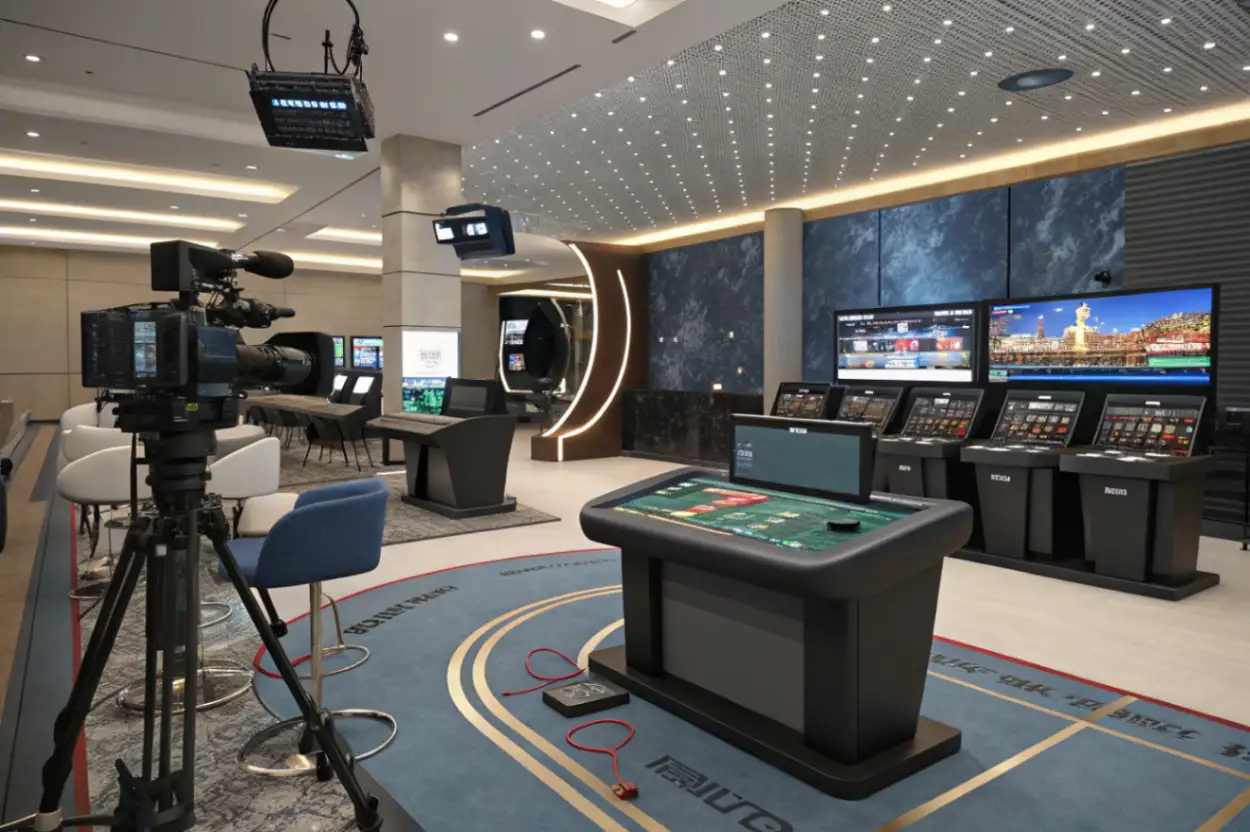
Streaming isn’t just “video inside a casino” anymore. In 2026, the best live-casino experiences feel like real gameplay loops: fast feedback, social energy, watch-to-play transitions, and a UI that treats the stream as a game surface (not a rectangle on the page). This article breaks down practical, build-ready best practices—plus real-world examples of casinos and streaming platforms you can benchmark.
Product Strategy: Turn Live Casino Streaming into a Game Loop (Not a Feature)
Primary SEO focus: live casino streaming integration, interactive live dealer, gamified live casino, low latency live casino
In 2026, “live dealer” is table stakes. Differentiation comes from how quickly players can enter, how naturally they can interact, and how often they’re nudged into meaningful choices (bets, side mechanics, community challenges, personalization).
Design around three modes (and make switching instant):
Watch mode: low-friction entry (no registration wall if regulation allows), clear RTP/limits disclosure, and “what happens next” cues.
Play mode: minimal latency, clear betting state, and a UI that never hides critical controls behind the stream.
Social mode: chat, reactions, poll mechanics, and shared milestones (without encouraging risky behavior).
Make streaming-native formats first-class. Live game shows (e.g., Evolution’s “Lightning” family and titles like Lightning Roulette or Crazy Time-style experiences) work well because they already feel like “events,” not silent table rounds. Use them to anchor your lobby and retention beats.
Examples you can reference (casino side):
Casinos widely associated with large live-dealer catalogs from major studios include brands such as PokerStars Casino, BetMGM, PlayOJO, and Duelz (availability varies by jurisdiction and licensing).
For benchmarking “best live dealer casino” UX patterns, review curated lists that specifically evaluate stream quality and live experience.
Examples you can reference (streaming-platform side):
Mainstream livestream ecosystems to consider for distribution and creator partnerships include Twitch, YouTube Live, Kick, TikTok LIVE, and regional platforms like SOOP (Korea) and CHZZK (again: policy and category restrictions differ by platform).
Streaming Tech & Architecture: Low Latency, Multi-Angle, and “Instant Truth”
Primary SEO focus: low-latency streaming for iGaming, real-time video streaming live casino, multi-camera live dealer, instant replay disputes
The technical goal in 2026 is simple: the stream must feel synchronized with the betting UI. If players see outcomes late, miss the betting window, or experience “desync anxiety,” retention drops fast.
Before you choose vendors or protocols, align your architecture to four performance truths:
Latency matters more than raw resolution for “feel.”
The stream is part of gameplay state, not media playback.
You need observability per table/device/network—not averages.
Disputes happen; fast replay and event logs save money.
Below is a practical checklist table you can adapt to planning, procurement, and QA.
2026 Streaming Integration Checklist for Live Casino
| Integration Layer | Best Practice (2026-ready) | What to Measure | Example Vendors / Capabilities |
|---|---|---|---|
| Capture & Encoding | Encode for interactivity: stable frame pacing, consistent bitrate, quick ramp after packet loss | Join time, rebuffer %, “time-to-first-bet” | Real-time iGaming streaming solution stacks emphasize consistency and workflow fit |
| Latency Pipeline | Target “interaction latency,” not just glass-to-glass; keep UI timers aligned to stream timecodes | Median & p95 end-to-end latency, bet window misses | Low-latency iGaming streaming is a core positioning for dedicated solutions |
| Multi-View / Angles | Offer multi-camera views for trust and immersion (wheel close-up, dealer, table overview) | View-switch rate, retention by angle | Multi-view is explicitly promoted for iGaming use cases |
| Trust & Disputes | Build “instant replay” and event timelines for support and compliance | Dispute resolution time, chargeback rate | Instant replay / clipping is highlighted for dispute handling |
| Client SDK & UX | Use SDK patterns that allow stream overlay UI without input lag; keep controls responsive even if video degrades | Input delay, tap success, UI FPS | Open-architecture SDK positioning for live casino streaming is common |
| Deployment Model | Use hybrid/edge strategy where it reduces latency spikes; design graceful degradation | Latency variance by region/ISP | “Deploy on-prem, cloud, or hybrid” is a recurring requirement |
Implementation notes that usually move KPIs:
Timecode everything. Betting windows, UI countdowns, round state, and stream frames should share a consistent timing reference.
Graceful degradation: if bandwidth dips, reduce quality before you increase latency; keep controls crisp.
Lobby previews: short, low-cost stream previews increase conversion—but cap bandwidth and make them instantly stoppable.
UX & Interaction: Overlays, Social Mechanics, and Watch-to-Play Conversion
Primary SEO focus: interactive live casino UX, live dealer overlays, gamification, social betting experience
A great live casino in 2026 feels less like “placing a wager” and more like “participating in a live session.” The key is interaction design that doesn’t interfere with clarity or responsible play.
Use the stream as a canvas, not a container. The most effective designs treat video as “background reality” and place interaction layers on top: dynamic odds panels, dealer prompts, outcomes, and community moments.
A list of UX patterns that consistently improve engagement (with safe design constraints):
Contextual overlays: show only what’s needed in the moment (limits, side bets, last outcomes), and fade when inactive.
Predictable interaction zones: place bet controls and confirmation in a fixed area so players never “hunt” while a timer runs.
Event cues: highlight “special moments” (bonus multipliers, featured tables, community milestones) like you would in a live-service game.
Watch-to-play CTA that respects pacing: invite play at natural breaks (new round start), not during decision stress.
Multi-angle “trust toggle”: allow players to switch to a verification angle when they want reassurance.
Chat that’s game-aware: auto-tag moments (“big multiplier round”) and surface helpful messages (limits, rules), not just noise.
Clips and shareables: allow compliant, privacy-safe highlights (“big win moments”) for retention loops and social reach.
Why this list works: it reduces cognitive load, increases perceived fairness, and creates “session identity” (players remember the room they played in). After you implement these patterns, measure (a) first-session completion rate, (b) round participation frequency, and (c) return rate to the same table/host.
Streaming-platform examples (for marketing/creator distribution):
Use mainstream platforms (Twitch/YouTube Live/Kick) for creator partnerships and audience acquisition, but treat them as top-of-funnel unless policy permits deeper integration. Build your own compliant in-product “watch” hub to control UX and ensure age-gating, geo checks, and safer messaging.
Content & Format: Game Shows, Hosts, and “Broadcast-Quality” Scheduling
Primary SEO focus: live casino game shows, Lightning Roulette, interactive casino streaming, live dealer studio
The content layer is where 2026 operators win or lose. If your live lobby feels like an endless list of tables, you’re competing on bonuses and limits. If it feels like a program schedule, you’re competing on experience.
What works best in 2026:
Eventized game shows as primetime anchors (high spectacle, clear narrative arcs).
Host-led sessions that feel like “rooms” (recurring dealers/hosts, consistent tone).
Program blocks: “Beginner hour,” “High-limit spotlight,” “Community challenge night.”
Studios like Evolution emphasize high-production live roulette variants (e.g., Lightning Roulette) and game-show formats that naturally support overlays and audience energy.
Practical scheduling tactic:
Run a weekly “featured stream rail” in your lobby:
2–3 “always-on” tables (stable, low volatility feel)
2 rotating event tables (game show / special rule variant)
1 “community table” optimized for chat and social prompts
Casino examples to study (availability varies by region):
PokerStars Casino as a recognizable brand often used in examples of Evolution-powered live offerings.
BetMGM / PlayOJO / Duelz are commonly referenced for hosting Pragmatic Play live content (useful for benchmarking lobby composition and mobile flow).
Compliance, Safety, and Trust: Streaming Adds Risk—Design It Out
Primary SEO focus: responsible gambling live casino, compliance streaming, age gating, real-time moderation
Streaming intensifies emotion, and emotion increases risk. In 2026, “responsible gambling” can’t be a footer link—it must be a UX system.
Best practices that don’t kill conversion:
Soft friction at the right moments: reality checks and limit nudges at session boundaries (end of a round set), not mid-decision.
Transparent round logic: show rules, bet windows, and “why the round ended” states—clearly and consistently.
Moderation tooling: live chat requires moderation, filtering, and escalation workflows.
Jurisdiction-aware UX: dynamically adjust what’s visible based on licensing region, age checks, and local policy.
Trust features that reduce support costs:
Instant replay for disputes and clear, timestamped round histories (users calm down when you can show “what happened” immediately).
Multi-angle views for games where trust is paramount (roulette wheel close-up, table wide shot).
Growth & Monetization: Creator Funnels, Retention Loops, and Personalization
Primary SEO focus: casino streaming marketing, creator partnerships, retention, personalization for live casino
The modern funnel is “watch → trust → try → return.” Streaming is the trust engine, but only if you connect it to retention mechanics without making the experience feel predatory.
Growth best practices for 2026:
Creator partnerships (platform distribution): use Twitch/YouTube Live/Kick for reach and personality-driven discovery, but keep calls-to-action compliant and geo-aware.
In-product highlights: run a “Now Trending” rail based on safe metrics (viewer count, table popularity, completion rate), not “biggest losses/wins.”
Personalization that respects limits: recommend tables by pace (fast/slow), vibe (quiet/social), and stakes—avoid manipulative triggers.
Re-streaming and clipping workflows: highlight wins and memorable rounds (where legal and privacy-compliant) to feed social re-engagement.
Streaming trends to watch into late 2026:
Industry commentary is increasingly focused on innovations like improved latency workflows, richer interactivity, and more immersive streaming formats. Treat these as directional signals: build modularly so you can adopt new capabilities without rewriting your client.
Conclusion
The best 2026 live-casino products don’t “add streaming.” They turn streaming into gameplay: low-latency interaction, multi-angle trust, eventized formats, and social UX patterns that drive session identity. If you get the architecture right (latency + replay + observability) and pair it with streaming-native content (hosts, schedules, game-show energy), you create a live experience players return to—because it feels like a living game, not a video feed with buttons.